

Connecticut advocates are connecting climate action to the everyday issues shaping residents’ lives, from energy affordability and housing to food access, public health and community power.
HARTFORD — At Parkville Market Saturday afternoon, climate action wasn’t discussed only in terms of emissions, extreme weather or renewable energy. Organizers talked about housing, immigration, food, utility bills, public health and the everyday pressures facing Connecticut families.
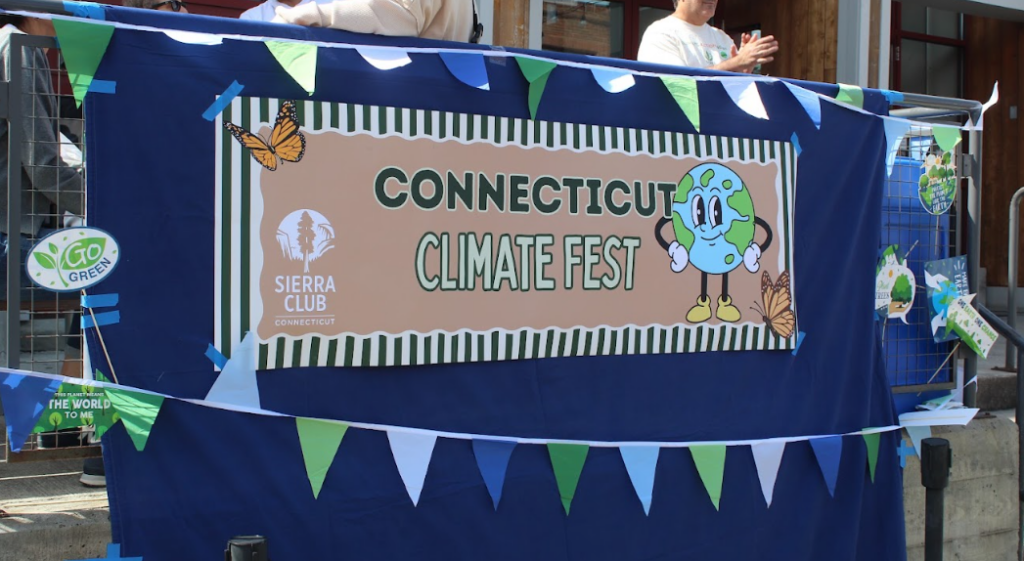
That broader understanding of environmental justice was at the center of Connecticut Climate Fest, held Sept. 19 and organized by Sierra Club Connecticut alongside dozens of environmental justice organizations, community groups and partners from across the state.
Held during Climate Week and coinciding with the internationally recognized Climate Week NYC, the gathering brought Connecticut’s climate and environmental justice movement together for a day of education, connection and community.
For Julianna Larue, a community organizer with Sierra Club Connecticut and one of the organizers of Climate Fest, the gathering was intentionally designed to show just how expansive the climate movement can be.
According to Larue, Hartford was also an intentional choice.
Larue pointed to Hartford’s experience as an environmental justice community, where environmental racism intersects with longstanding social and economic inequities. Organizers wanted the festival to connect what is happening locally with broader conversations taking place across the country and around the world.
That means talking about more than what might traditionally be considered climate issues. Housing, immigration, food access, affordability and other social issues are also part of the conversation.
“We are connecting different people working on different issues,” Larue said.
For Larue, that intersection is central to the purpose of Climate Fest: bringing advocates who may work in different movements into the same space and demonstrating how their work connects.
When Climate Justice Shows Up on the Utility Bill
For Tenaya Taylor, executive director of the Nonprofit Accountability Group, one of the clearest examples of that intersection is energy affordability.
Taylor spoke about the burden high energy costs place on Connecticut households and the importance of ensuring that the state’s Public Utilities Regulatory Authority, known as PURA, is responsive to community needs.
PURA regulates Connecticut’s investor-owned electric, natural gas and water utilities, putting the agency at the center of many decisions that ultimately affect ratepayers.
For advocates, that makes public participation in the regulatory process an important part of the fight for energy justice.
Taylor stressed the need for residents and community organizations to continue showing up, applying pressure and ensuring that regulators understand and respond to the needs of the communities affected by their decisions.
The conversation also illustrated one of Climate Fest’s central messages: climate policy does not begin and end with reducing emissions.
For a household struggling to keep up with an electric bill, questions about Connecticut’s energy system are also questions about affordability, economic security and quality of life.
Bringing Climate Organizing Into the Community
Alycia Jenkins, a community organizer with Sierra Club Connecticut, is working to bring another piece of Connecticut’s energy system directly into public conversation.
At Climate Fest, Jenkins promoted an upcoming community walk focused on Hartford’s Capitol Area System, a state-owned heating and cooling system serving buildings in and around the Capitol area.
The system has become the focus of advocacy around Connecticut’s continued reliance on fossil fuels and the possibility of transitioning toward cleaner energy alternatives.
The upcoming walk will give residents an opportunity to learn more about the infrastructure operating in their own community and how decisions surrounding energy systems can intersect with pollution, public health and environmental justice.
It is also representative of the type of organizing highlighted throughout Climate Fest: making complex environmental and policy issues more accessible by connecting them to the places where people live, work and gather.
From Hartford to Hamden
Saturday’s Climate Fest will not be the last time Larue, Taylor and Jenkins come together during Climate Week.
All three are scheduled to participate Monday, Sept. 21, in “Building People Power for Environmental Justice,” a panel discussion at Whitneyville Cultural Commons in Hamden.
The gathering will bring environmental justice advocates together to discuss how communities can build collective power, strengthen relationships and translate awareness into action.
Their participation creates a natural bridge between Climate Fest and the organizing happening throughout Climate Week, moving conversations about environmental justice from a community festival in Hartford into deeper discussions about power, advocacy and collective action.
For organizers, building that power also means expanding who sees themselves as part of the climate movement.
A Bigger Definition of Climate Action
The conversations at Connecticut Climate Fest offered a broader definition of what climate action can look like.
It can mean advocating for cleaner energy infrastructure and reducing pollution. But it can also mean asking why a family’s utility bill is unaffordable, whether residents have access to safe housing and healthy food, how immigration intersects with environmental and economic vulnerability, and whether communities most affected by environmental decisions have a meaningful voice in shaping them.
Those issues are often discussed separately. At Climate Fest, advocates presented them as interconnected pieces of a larger environmental justice movement.
And holding that conversation in Hartford was part of the message.
By bringing advocates from across Connecticut into an environmental justice community, Climate Fest grounded the larger conversations happening during Climate Week in the experiences of residents confronting environmental and social inequities in their everyday lives.
From Hartford’s Parkville Market to Monday’s gathering in Hamden, organizers are continuing to make the case that building a stronger climate movement requires more than changing energy systems. It also requires building relationships across movements, creating pathways for community participation and recognizing that climate justice is connected to the many issues shaping how people live.


